What Is SEO? A Beginner’s Guide to Getting Found Online
If you’ve ever wondered why some websites show up on Google’s first page while others seem invisible, SEO is the answer.
SEO, or search engine optimization, is the process of improving your website so search engines rank it higher in results — bringing in more visitors without paying for ads. It’s built for business owners, marketers, bloggers, and anyone who wants their website to actually get traffic.
In this guide, you’ll learn:
- The basics of SEO and how search engines decide what ranks
- The core components that work together to push your site up the rankings
- The common mistakes that quietly kill your chances of getting found
No jargon, no fluff — just what you need to know to start making SEO work for you.
Understanding the Basics of SEO
The Simple Definition of SEO and Why It Matters
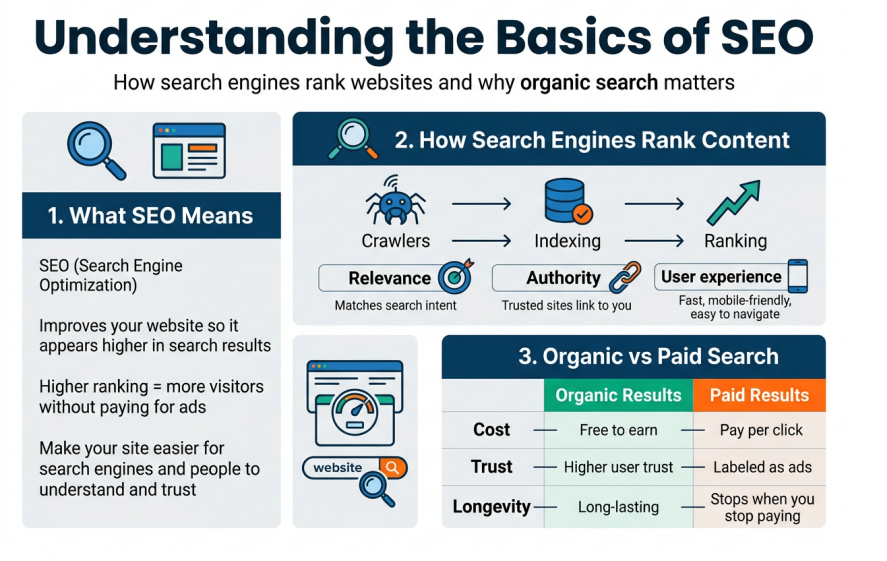
SEO (Search Engine Optimization) is the practice of improving your website so it shows up higher in search results when people look for topics related to your business. The higher you rank, the more visitors you get — without paying for ads.
Think of it as making your website easier for both search engines and real people to understand and trust.
How Search Engines Work to Rank Your Content
Search engines like Google use automated programs called crawlers to scan websites across the internet. They then store and organize this information (called indexing) and rank pages based on hundreds of signals when someone searches for something.
Key ranking factors include:
- Relevance – Does your content match what the user is searching for?
- Authority – Do other trusted sites link to you?
- User Experience – Is your site fast, mobile-friendly, and easy to navigate?
The Key Difference Between Organic and Paid Search Results
Organic Results | Paid Results | |
Cost | Free to earn | Pay per click |
Trust | Higher user trust | Labeled as ads |
Longevity | Long-lasting | Stops when budget runs out |
Effort | Requires consistent SEO work | Immediate but costly |
Organic results are earned through great SEO — paid results are bought through platforms like Google Ads.
The Core Components That Make SEO Work
On-Page SEO: Optimizing Content for Better Rankings
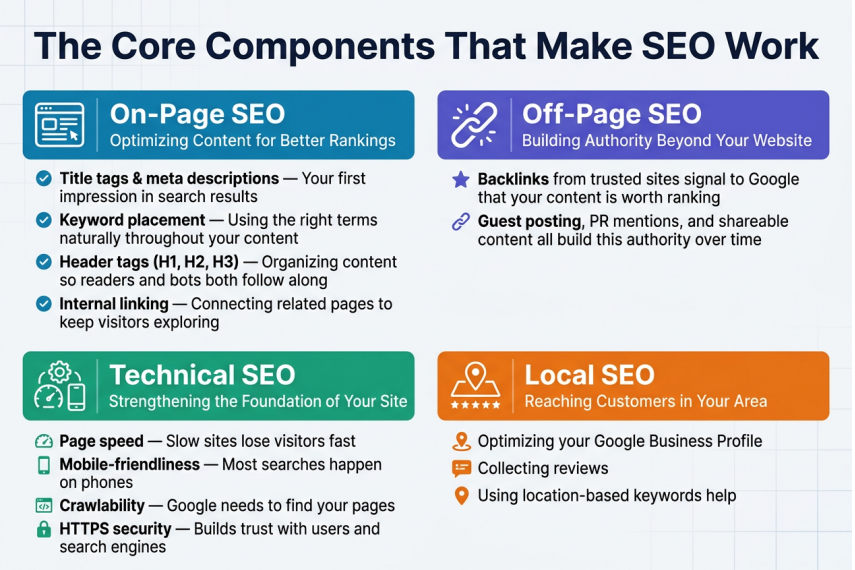
This is everything you do on your website to help search engines understand your content:
Title tags & meta descriptions – Your first impression in search results
Keyword placement – Using the right terms naturally throughout your content
Header tags (H1, H2, H3) – Organizing content so readers and bots both follow along
Internal linking – Connecting related pages to keep visitors exploring
Off-Page SEO: Building Authority Beyond Your Website
Think of off-page SEO as your website’s reputation online. Backlinks from trusted sites signal to Google that your content is worth ranking.
Guest posting, PR mentions, and shareable content all build this authority over time.
Technical SEO: Strengthening the Foundation of Your Site Even great content fails if your site runs poorly. Technical SEO covers:
Factor | Why It Matters |
Page speed | Slow sites lose visitors fast |
Mobile-friendliness | Most searches happen on phones |
Crawlability | Google needs to find your pages |
HTTPS security | Builds trust with users and search engines |
Local SEO: Reaching Customers in Your Area
If you run a local business, this is your secret weapon. Optimizing your Google Business Profile, collecting reviews, and using location-based keywords help nearby customers find you first.
Why SEO Is Essential for Your Online Success
How SEO Drives Long-Term Organic Traffic
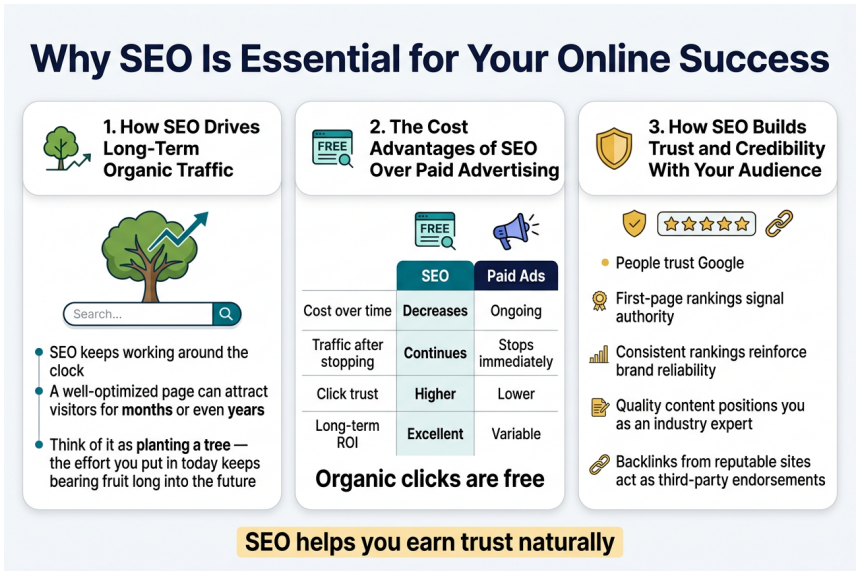
Unlike paid ads that stop the moment your budget runs out, SEO keeps working around the clock. A well-optimized page can attract visitors for months or even years without additional spend. Think of it as planting a tree — the effort you put in today keeps bearing fruit long into the future.
The Cost Advantages of SEO Over Paid Advertising Here’s a quick comparison:
Feature | SEO | Paid Ads |
Cost over time | Decreases | Ongoing |
Traffic after stopping | Continues | Stops immediately |
Click trust | Higher | Lower |
Long-term ROI | Excellent | Variable |
Organic clicks are free. Once you rank, you’re not paying per visit, making SEO one of the best investments for sustainable growth.
How SEO Builds Trust and Credibility With Your Audience
People trust Google. When your website shows up on the first page, visitors automatically assume you’re a credible source. High rankings signal authority — nobody thinks the top results are random.
- Consistent rankings reinforce brand reliability
- Quality content positions you as an industry expert
- Backlinks from reputable sites act as third-party endorsements
That kind of trust is hard to buy — but SEO helps you earn it naturally.
Key SEO Strategies That Deliver Real Results
Finding the Right Keywords to Target Your Ideal Audience
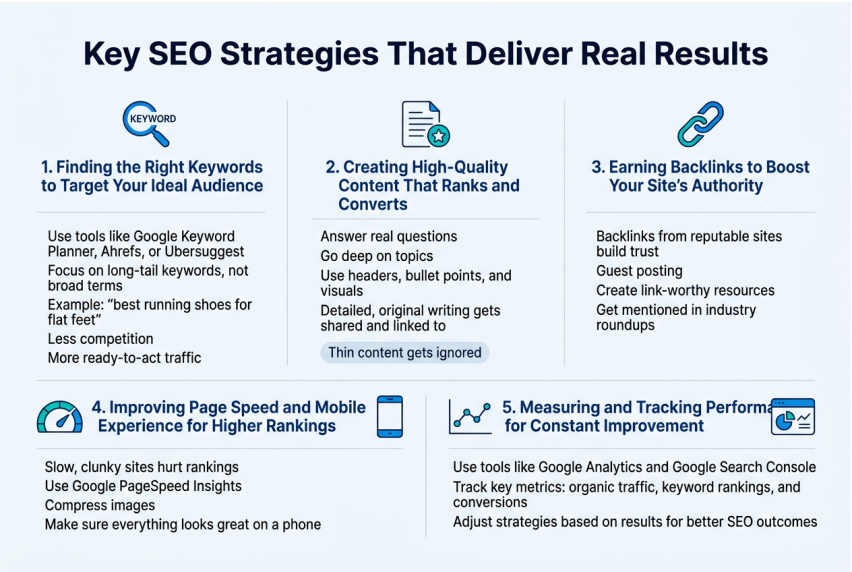
Skip the guesswork — use tools like Google Keyword Planner, Ahrefs, or Ubersuggest to find what your audience actually searches for. Focus on long-tail keywords (e.g., “best running shoes for flat feet”) over broad terms. They have less competition and attract people ready to act.
Creating High-Quality Content That Ranks and Converts
Google rewards content that genuinely helps people. Answer real questions, go deep on topics, and structure your pages clearly with headers, bullet points, and visuals. Thin, rushed content gets ignored — detailed, original writing gets shared and linked to.
Earning Backlinks to Boost Your Site’s Authority
Backlinks from reputable sites tell Google your content is trustworthy. Build them through guest posting, creating link-worthy resources, or getting mentioned in industry roundups.
Improving Page Speed and Mobile Experience for Higher Rankings
A slow, clunky site kills rankings fast. Use Google PageSpeed Insights to spot issues, compress images, and make sure everything looks great on a phone.
Tracking and Measuring SEO Performance to Refine Your Strategy
Use Google Analytics and Google Search Console to monitor:
Metric | What It Tells You |
Organic traffic | How many visitors find you via search |
Click-through rate | How compelling your titles are |
Bounce rate | Whether content matches intent |
Common SEO Mistakes That Hold Your Website Back
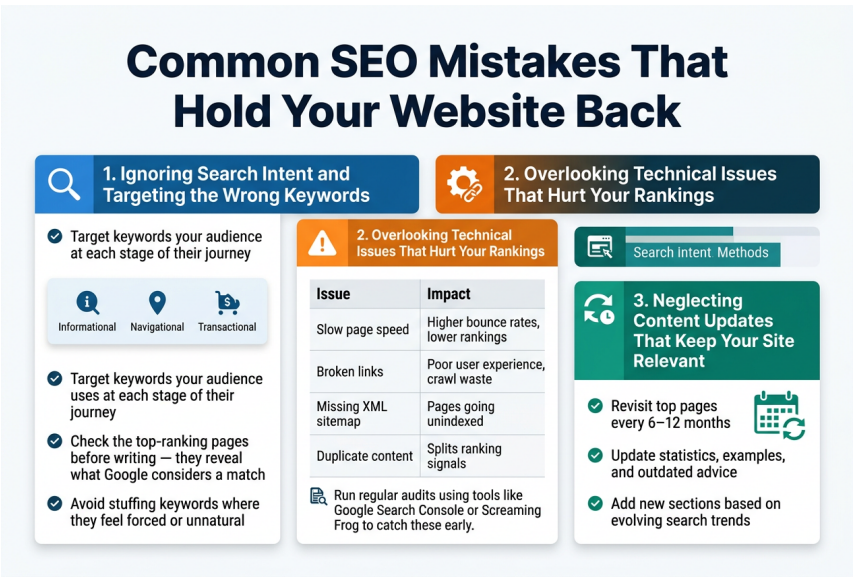
Ignoring Search Intent and Targeting the Wrong Keywords
Chasing high-volume keywords without understanding why someone searches them is a fast track to wasted effort. Google prioritizes content that matches what users actually want — informational, navigational, or transactional intent.
- Target keywords your audience uses at each stage of their journey
- Check the top-ranking pages before writing — they reveal what Google considers a match
- Avoid stuffing keywords where they feel forced or unnatural
Overlooking Technical Issues That Hurt Your Rankings
A beautifully written page means nothing if search engines can’t crawl or load it properly. Common technical pitfalls include:
Issue | Impact |
Slow page speed | Higher bounce rates, lower rankings |
Issue | Impact |
Broken links | Poor user experience, crawl waste |
Missing XML sitemap | Pages going unindexed |
Duplicate content | Splits ranking signals |
Run regular audits using tools like Google Search Console or Screaming Frog to catch these early.
Neglecting Content Updates That Keep Your Site Relevant
Old content quietly loses rankings as fresher, more accurate pages take over. Search engines favor content that reflects current information.
- Revisit top pages every 6–12 months
- Update statistics, examples, and outdated advice
- Add new sections based on evolving search trends
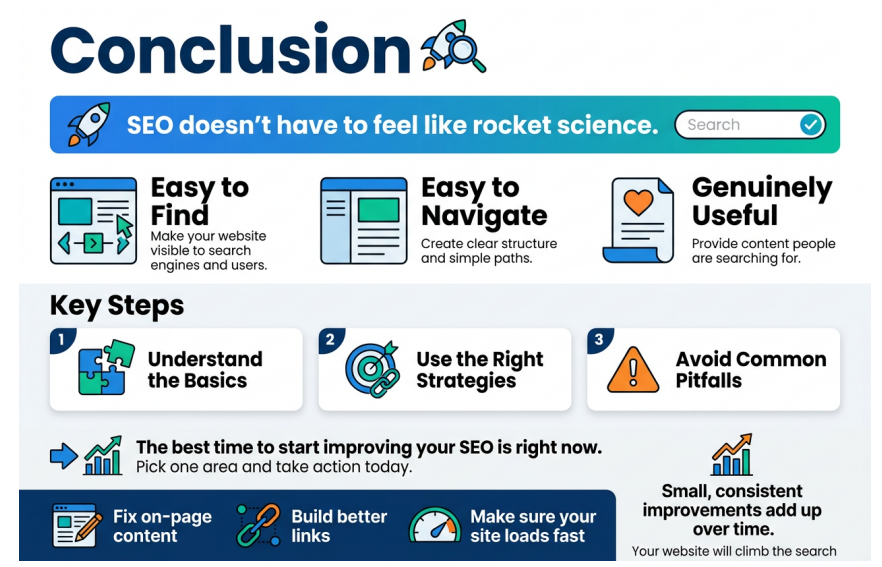
SEO doesn’t have to feel like rocket science. At its core, it’s about making your website easy to find, easy to navigate, and genuinely useful to the people searching for what you offer. From understanding the basic building blocks to nailing the right strategies and dodging common pitfalls, every step you take toward better SEO brings you closer to getting the visibility your website deserves.
The best time to start improving your SEO is right now. Pick one area from what you’ve learned here, whether that’s fixing your on-page content, building better links, or simply making sure your site loads fast, and take action on it today. Small, consistent improvements add up over time, and before you know it, your website will be climbing the search rankings and pulling in the traffic that actually matters to your business.